Skin tumors
Cutaneous and subcutaneous tumors are abnormal growths of cells that develop in or beneath the skin. Skin tumors include benign lesions, such as warts and sebaceous cysts, as well as malignant tumors such as basal cell carcinoma, squamous cell carcinoma and melanoma.
Early diagnosis and appropriate treatment, particularly surgery and radiotherapy, are essential for managing these tumors.
Summary
Duration
Less than 1 hour
Hospital stay
Outpatient
Anesthesia
Local
Social downtime
2 to 5 days
Time off work
None
Scars
Fine scars
Summary
General information on cutaneous and subcutaneous tumors
Skin tumors include :
- Benign lesions whose progression can become bothersome due to their size or number.
- Malignant lesions such as skin cancers and melanomas.
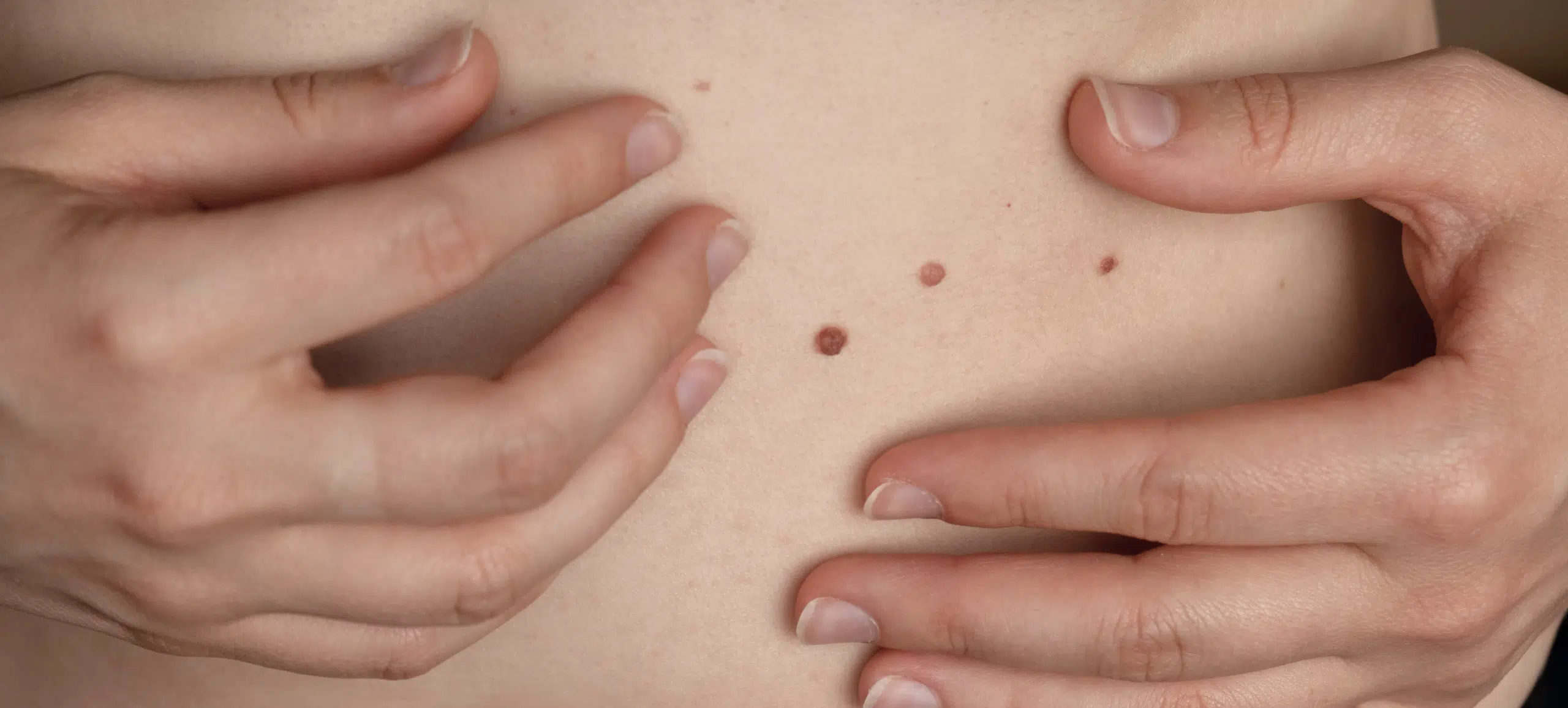
By definition, they are visible since they are located on the skin, but they are often overlooked when situated on the back or on the scalp. They may appear as a lump or swelling on the back or as a localized mass. Skin tumors are extremely common and justify regular monitoring by a dermatologist.
They may be removed for three main reasons :
- Aesthetic reasons : for example, a large benign nevus on the nose
- Comfort reasons : for example, a cyst located just under a bra strap
- Medical reasons with a risk of progressive disease : cancer or melanoma
Subcutaneous tumors form a kind of bulge beneath the skin and also require a diagnostic consultation. It is important to determine whether the appearance of a lump under the skin is a completely benign sebaceous cyst or a melanoma metastasis, in which case the underlying cause must be identified.
Make an appointement
If you wish to benefit from a personalised consultation with Dr Marianne Prevot.

Which types of tumors are treated by Doctor Marianne Prevot?
Melanoma
Melanoma is a type of skin cancer that develops from melanocytes, the cells responsible for pigmentation. It is potentially very dangerous due to its ability to spread rapidly to other parts of the body. Warning signs include changes in moles, such as size, shape, color or bleeding.
Precancerous lesions
Precancerous lesions, such as actinic keratosis, are areas of damaged skin that carry an increased risk of developing into cancer. They often appear as rough, scaly patches and are frequently the result of prolonged sun exposure. Regular dermatologic follow up is essential to monitor these lesions.
Basal cell carcinoma
Basal cell carcinoma is the most common and least aggressive form of skin cancer. It usually develops on sun exposed areas such as the face and neck. It often appears as open sores, shiny bumps or raised scars. Although it rarely spreads, treatment is necessary to prevent significant local damage.
Squamous cell carcinoma
Squamous cell carcinoma, also known as epidermoid carcinoma, is a skin cancer that can develop anywhere on the body, but more often on sun exposed areas. It presents as red patches, ulcers or persistent scabs. This type of cancer can spread to surrounding tissues and requires prompt treatment.
Kaposi’s disease
Kaposi’s disease is a type of cancer that appears as purplish spots or nodules on the skin and mucous membranes. It is often associated with immunodeficiency, such as in patients with HIV/AIDS. It may also affect internal organs and requires a combination of treatments, including chemotherapy and antiviral therapies.
Cutaneous lymphomas
Cutaneous lymphomas are cancers that originate in lymphocytes, a type of white blood cell, and primarily affect the skin. They appear as plaques, nodules or red patches. Treatment depends on the type and extent of the lymphoma and may include targeted therapies, radiotherapy or chemotherapy.
Indications for excision
The indication for excision is most often determined by the dermatologist. It may also be established by a surgeon trained in dermatology, or simply requested by the patient for cosmetic reasons.
Technique for removing a subcutaneous mass
As with any procedure, a preliminary consultation is essential to explain the course and the risks of the intervention, even when it is very minor. The procedure consists of incising the skin to remove the lesion and closing it according to the principles of aesthetic surgery in order to achieve a minimal scar.
Procedure
The procedure takes place either in the medical surgical office or in the clinic, in the operating room, most often under local anesthesia alone. The duration of the operation is generally less than one hour. You can then return home, with a follow up appointment scheduled for postoperative care.
Postoperative course
Recovery is painless and quick and does not require time off work. Between the fifth and the tenth day, the sttches are removed, and from the fifteenth day onward, all sporting activities can be resumed, including swimming.
Results of skin tumor surgery
Particular attention is paid to the scar, which requires follow up appointments at two months and six months. Results depend on scar evolution, which is often barely noticeable.
Mohs micrographic surgery
Mohs surgery is a technique for excising cancerous skin lesions that ensures the entire lesion is removed before closing the skin. It allows for an extremely precise excision, as small and as effective as possible.
The lesion is removed layer by layer, with each layer immediately examined under the microscope. Surgery stops as soon as healthy tissue is reached.
This technique was described in the 1940s by Dr Frederic E. Mohs and has since spread to most major cities in the United States, somewhat less so in Switzerland and France, specifically for the treatment of skin cancers. If a cancerous lesion is not completely removed, recurrence will occur early, and the reconstructive flap used to close the defect may alter anatomical landmarks and mask recurrence. This creates a risk of tumor progression leading to more extensive and destructive surgery.
This technique is particularly valuable for aggressive skin cancers of the face.
Discuss this option with your surgeon.
DR marianne prevot
Dr Marianne prevot is a plastic surgeon in Geneva specializing in aesthetic reconstructive pediatric and dermatologic surgery. With more than 20 years of experience she combines medical expertise scientific commitment and a human centered approach.
Her practice is based on harmony between body and mind with an ethical and balanced vision of surgery.