Upper blepharoplasty
Upper blepharoplasty or eyelid surgery brightens the eyes, makes them look less sad and heals very quickly. It is one of the most effective aesthetic procedures. This is a safe and light surgery, with excellent results in most cases, perfectly aligned with the goal of aesthetic surgery : to be corrected without being detectable.
Upper eyelid surgery is often the first step in facial rejuvenation. It complements aesthetic medicine techniques to brighten the face in a simple and safe way, with fast recovery.
Summary
Duration
Around 1 hour
Hospital stay
Outpatient
Anesthesia
Local
Social downtime
5 to 7 days
Time off work
1 week to 10 days
Scars
Pinkish discreet
Summary
- What is an upper blepharoplasty?
- What results can be expected from upper blepharoplasty?
- What are the indications for upper blepharoplasty?
- What technique is used for upper blepharoplasty?
- How is upper blepharoplasty performed?
- What is the post-operative course after an upper blepharoplasty ?
- Postoperative precautions
- Objectives of blepharoplasty
- Steps of eyelid surgery
- What is the cost of blepharoplasty ?
- Faq
What is an upper blepharoplasty?
“I look sad”, “I can no longer apply makeup”, “My eyes look tired”… both men and women eventually experience this excess skin forming above the eyes, often as they have seen in their parents.
Eyelid surgery has an aesthetic and functional purpose. It corrects the effects of aging and other eyelid abnormalities such as ptosis. These imperfections may be caused by excess skin (dermatochalasis), prominent fat pads or tissue laxity.
Upper eyelid surgery is frequently requested to restore a younger appearance, but also to improve visual comfort in some patients. Each gesture is performed with great care and technical precision, for a subtle yet transformative result.
What results can be expected from upper blepharoplasty?
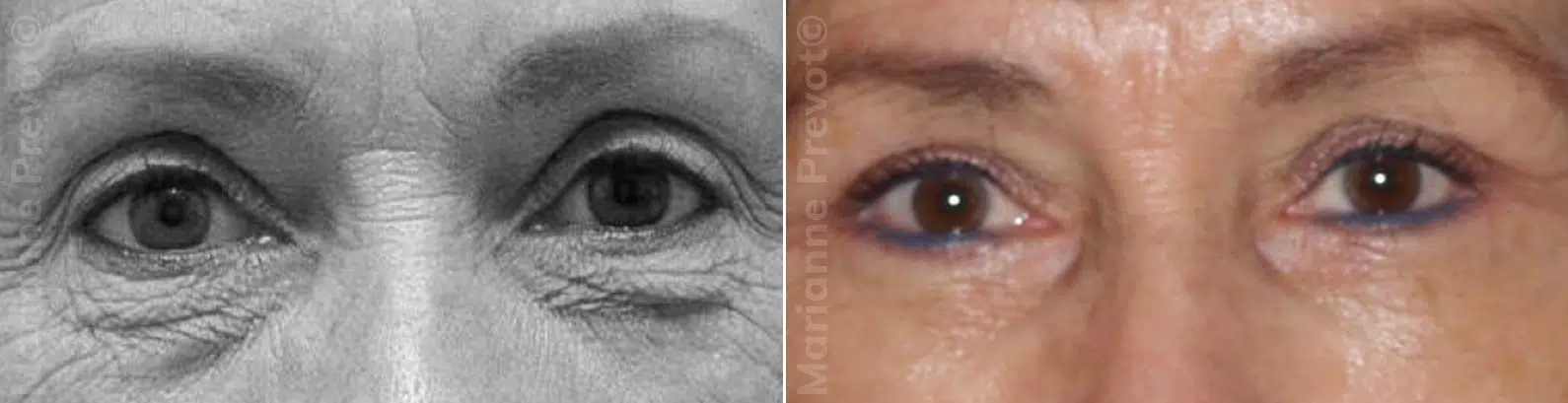
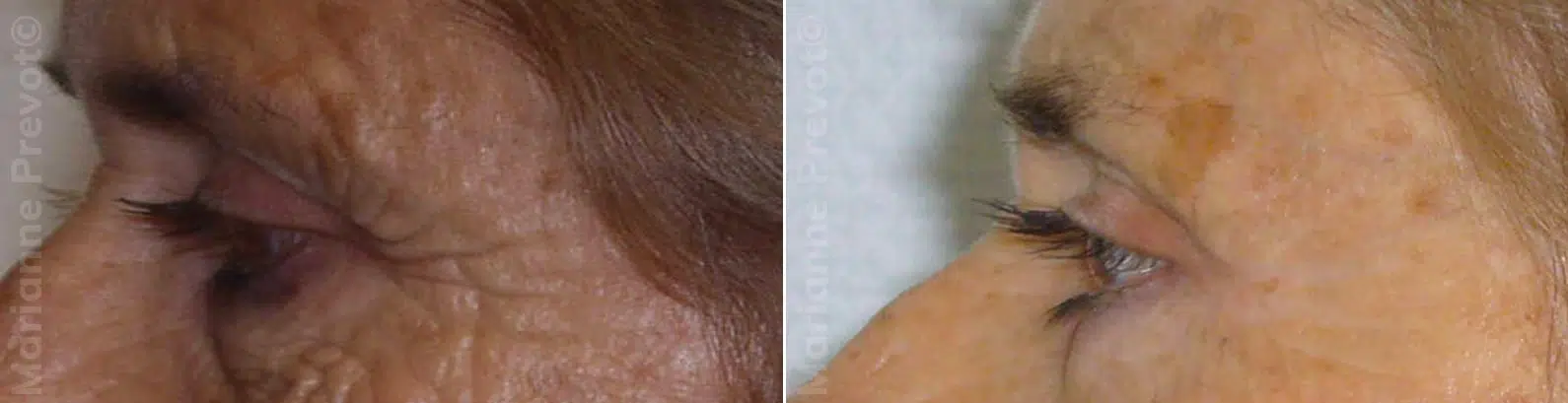
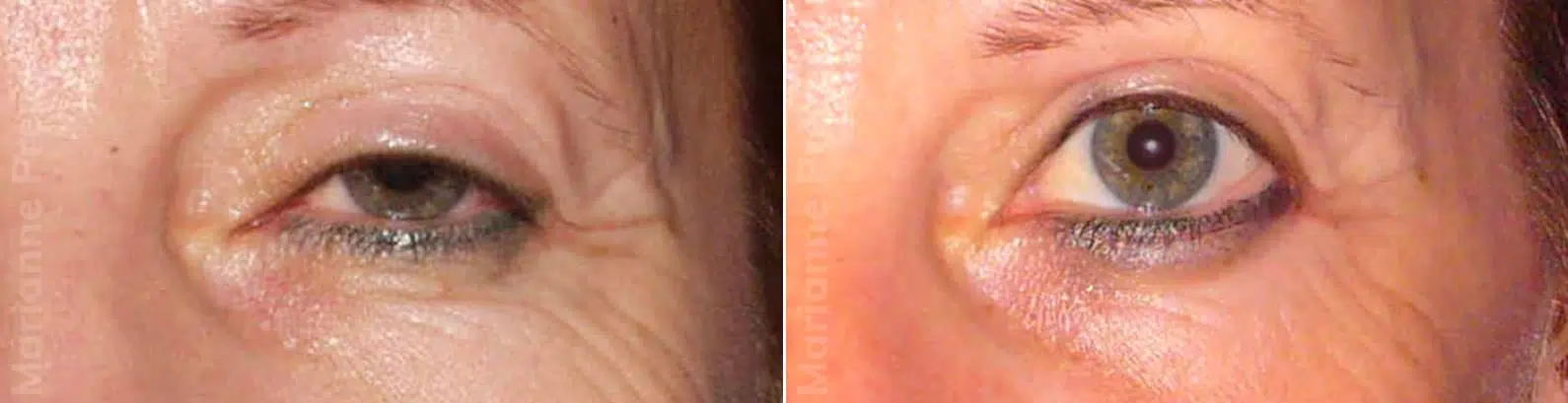
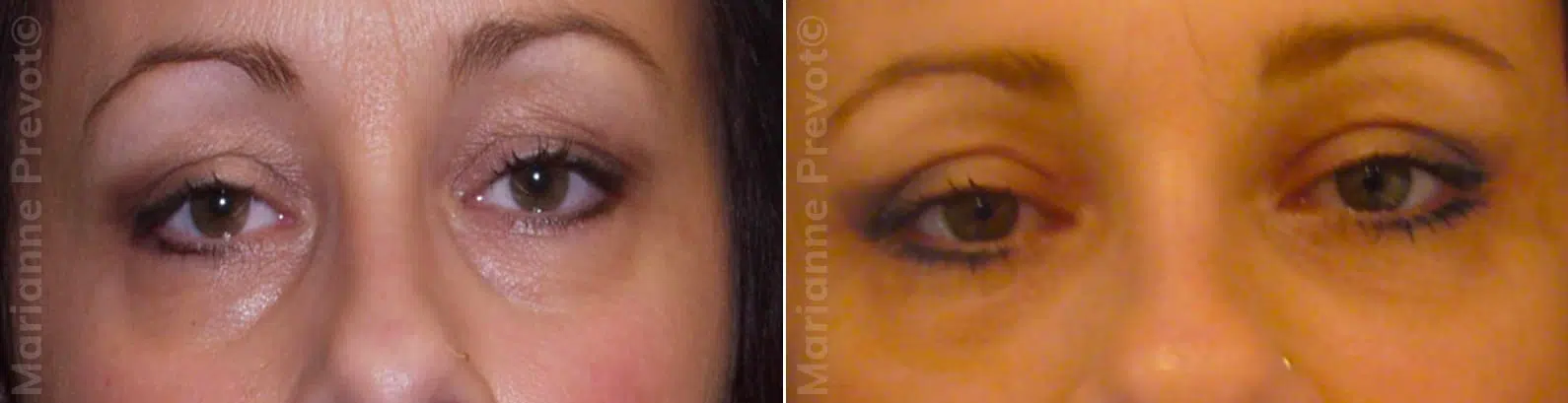
A clearer gaze, no more sad or tired appearance at work or among friends. Results are generally highly satisfying and provide a noticeable rejuvenation of the eyes. Excess skin and unsightly fat pads are removed, leaving the eyelids smoother and firmer.
This correction enhances the eyes, widens the visual field and gives a more open and luminous gaze.
What are the indications for upper blepharoplasty?
Upper blepharoplasty mainly concerns patients bothered by excess skin on the eyelids, giving a heavy or obstructed look, sometimes associated with a feeling of heaviness.
Indications may also be purely aesthetic : difficulty applying makeup or the desire to regain a fresh and dynamic gaze.
Caution is required in false indications where the issue is mainly eyebrow descent, a situation often encountered in men.
Make an appointement
If you wish to benefit from a personalised consultation with Dr Marianne Prevot.

What technique is used for upper blepharoplasty?
After a consultation where your eyes will be examined, all parameters analyzed, and photographs taken, the procedure can be performed. I use a conservative technique which, with my patients’ consent, allows them to maintain their natural appearance. The goal is most often to restore their “former” look by eliminating the signs of aging.
The muscle is fully preserved and the scar is hidden in the natural upper eyelid crease.
How is upper blepharoplasty performed?
Most often under local anesthesia. You are lying down and first feel small pinpricks followed by a sensation of heaviness due to the anesthetic. Each eyelid is then operated on, for a total procedure time of about one hour.
Small bandages are placed over your eyes and you remain lying down for a while longer with a cooling mask. You can then go home accompanied.
What is the post-operative course after an upper blepharoplasty?
The postoperative effects of upper blepharoplasty are very well tolerated provided that an initial rest period of 24 hours is observed. A week of social and professional isolation is usually sufficient.
Pain
In the days following the procedure, it is common to experience bruising and swelling of the eyelids. Dr. Prevot advises you to wear large, protective sunglasses during this time. Minor bruising under the eyelids will disappear within 1 to 2 weeks.
A sensation of tightness or mild pain may occur but is easily managed with simple painkillers. Intense physical effort should be avoided and cold compresses help limit swelling. Sutures are usually removed around day six.
Scars
Scars are initially pink but gradually fade to become almost invisible. For optimal recovery it is essential to carefully follow Dr prevot’s postoperative instructions and avoid sun exposure during the first weeks.
Length of hospitalization
The procedure is performed on an outpatient basis. Patients may leave the same day after surgical evaluation. Sick leave of 1 week to 10 days is recommended to promote healing.
Postoperative precautions
Some precautions are necessary to avoid complications.
On the day of surgery do not stay alone. Avoid driving working on screens or using dangerous machinery.
In the following days apply cold water compresses to reduce swelling and follow the treatments prescribed by Dr Prevot.
Avoid rubbing your eyes for the first 10 days and sleep on your back with your head slightly elevated by a pillow. Makeup is not recommended for a week, and avoid exposure to the sun, wind, dust, or heat (sunglasses will be your most valuable ally).
Objectives of blepharoplasty
The goal of surgery is to enhance the eye area by removing excess skin and redistributing volumes harmoniously. Two areas may be treated :
Upper eyelids
- Excess skin creating drooping eyelids
- Presence of a fold on the upper eyelid
- Fat pads
Lower eyelids
- Dark circles
- Excess skin creating fine horizontal wrinkles
- Bags or fatty deposits.
Steps of eyelid surgery
Hospitalization is always outpatient. Anesthesia depends on the procedure and patient and may be local local with sedation or general.
The procedure lasts between 30 and 90 minutes, depending on the steps involved.
Blepharoplasty is performed in three stages :
- Removal of excess eyelid skin
- Removal of any fat deposits
- Suturing of the skin for virtually invisible scars.
What is the cost of blepharoplasty?
The cost of blepharoplasty varies depending on the complexity of the procedure, as well as associated fees such as those of the anesthesiologist and the clinic.
In some cases, if the surgery is performed for medical reasons, such as visual impairment due to significant excess skin or a muscle abnormality, partial or full coverage by insurance may be possible. However, for purely cosmetic procedures, coverage is not available.
Dr prevot will see you for a personalized detailed quotation and advise you on possible coverage.
| Procedures | Prices |
| Upper blepharoplasty | From CHF 3000 |
| Lower blepharoplasty | From CHF 4500 |
| Asian blepharoplasty | From CHF 3500 |
FAQ
Blepharoplasty helps to harmonize the contour of the eye. This procedure is often performed in cases of excess skin that ages the eyes and face. There are also cases of excess under-eye bags or skin due to genetics, in which case the operation is suitable for younger patients (provided they are of legal age).
During upper eyelid surgery, the scars are concealed in the crease located halfway up the eyelid.
For lower eyelid surgery, the scars are placed 1 to 2 mm below the eyelashes. The transconjunctival technique leaves no visible scars.
The scars are always hidden in the natural creases and are very fine: they become almost completely invisible.
In most cases, blepharoplasty is considered a cosmetic procedure and is therefore not covered by insurance. However, if the discomfort is too significant and prevents proper eyelid function, as in the case of dermatochalasis or ptosis, the procedure may be covered.
The first results are visible after one week. For the final result of blepharoplasty, it will be necessary to wait until the swelling and edema have subsided. Generally, this takes about 6 months.
Eyelid surgery can improve the field of vision ; it does not disrupt vision except perhaps for the first few days if the swelling is significant.
DR marianne prevot
Dr Marianne prevot is a plastic surgeon in Geneva specializing in aesthetic reconstructive pediatric and dermatologic surgery. With more than 20 years of experience she combines medical expertise scientific commitment and a human centered approach.
Her practice is based on harmony between body and mind with an ethical and balanced vision of surgery.