Lower blepharoplasty
Bags, dark circles, “under-eye suitcases”… these are common imperfections of the lower eyelids, whether hereditary or acquired. Very difficult to conceal with makeup, their most effective treatment is targeted eyelid surgery, known as lower blepharoplasty.
Summary
Duration
Between 30 minutes and 1 hour
Hospital stay
Outpatient
Anesthesia
General
Social downtime
5 to 7 days
Time off work
1 week to 10 days
Scars
Pinkish hidden under the eyelashes
Summary
- What is lower blepharoplasty?
- Who is lower blepharoplasty for?
- Why have a lower blepharoplasty ?
- What are the results of lower blepharoplasty ?
- What technique is used for lower eyelid surgery?
- Pre-operative consultations
- How is a lower blepharoplasty performed?
- What happens after lower blepharoplasty ?
- What are the costs of lower blepharoplasty?
- Faq
What is lower blepharoplasty?
The lower eyelids are very different from the upper eyelids, both anatomically and functionally. Less mobile, they ensure ocular stability and define the shape of the eye. Their sagging due to age can cause excessive tearing, which can be addressed with an additional procedure during the surgery.
Lower blepharoplasty is a surgical procedure dedicated to the aesthetic and functional correction of this area of the face.
This intervention revitalizes the gaze, giving a fresher, more rested appearance. It requires specific expertise to ensure natural results and avoid complications.
In the hands of a specialized aesthetic surgeon such as Dr Marianne Prevot, it transforms the eyes while fully respecting the overall harmony of the face.
Each procedure is guided by a constant search for balance, where precision makes all the difference.
Who is lower blepharoplasty for?
Lower blepharoplasty is primarily for individuals with visible signs of aging or genetic predispositions under the eyes. These signs include prominent bags, excess skin, wrinkles, or sagging in the under-eye area, often resulting in a tired appearance.
Some younger individuals may opt for this procedure if they have simple bags that can be treated without any scarring, or due to a genetic predisposition that leads to the early onset of these symptoms.
Therefore, there is no specific age limit for this procedure; the most important factor is being in good overall health.
Why have a lower blepharoplasty?
Lower blepharoplasty can be compared to a “gaze lift”. Its goal is to durably rejuvenate the eyes by eliminating imperfections of the lower eyelids. It is particularly effective in correcting hollow dark circles and fatty bags that give a tired appearance.
Lower blepharoplasty is indicated for people who wish to :
- Correct hollow under-eye circles
- Remove excess fat and bags under the eyes
- Correct wrinkles
It can also be combined with other facial aesthetic procedures such as a facelift.
Make an appointement
If you wish to benefit from a personalised consultation with Dr Marianne Prevot.

What are the results of lower blepharoplasty?
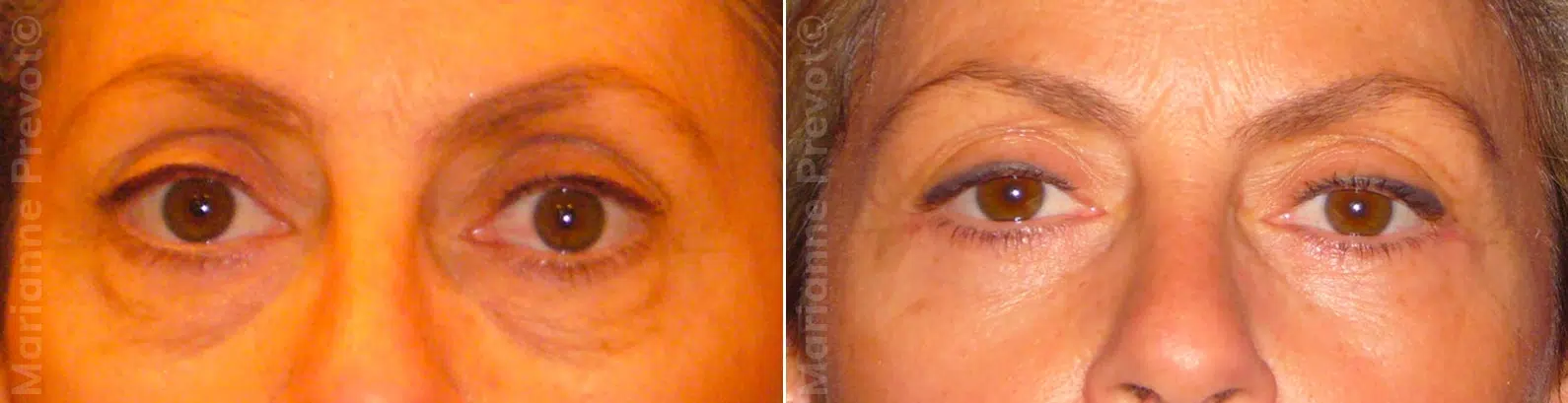
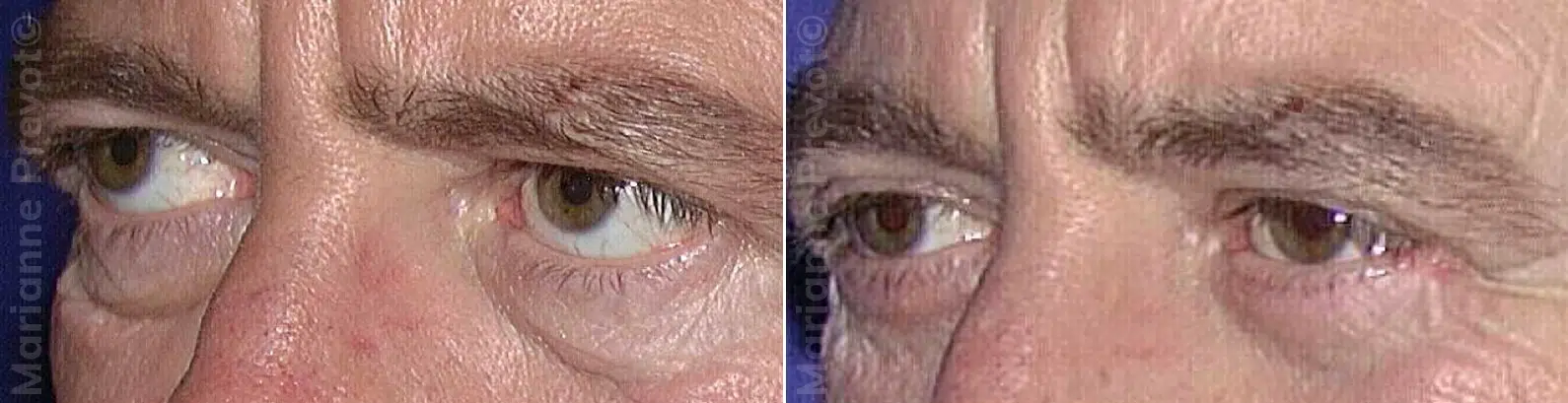
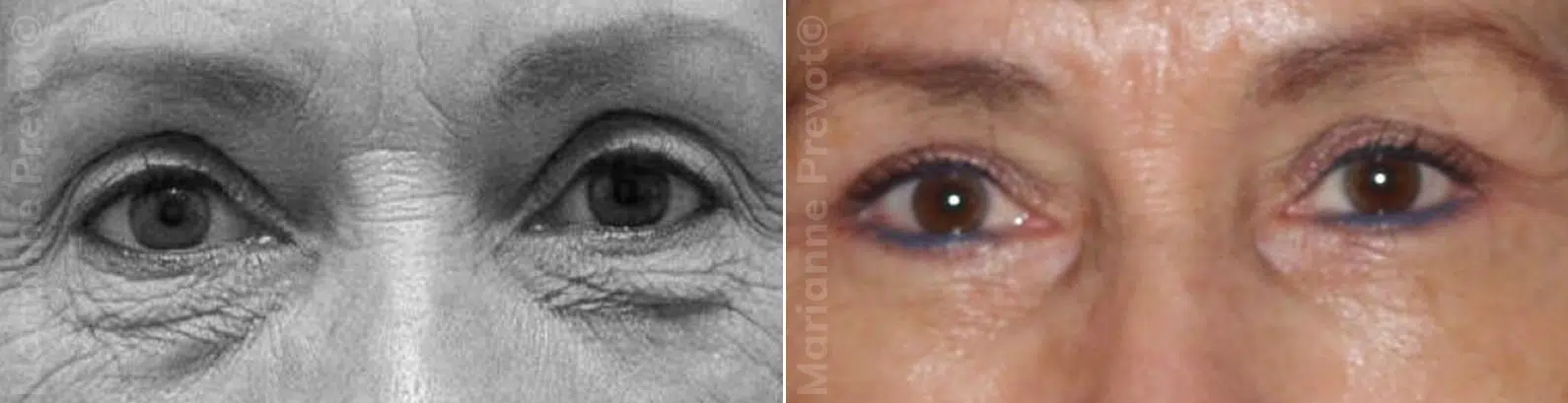
Lower blepharoplasty offers transformative results for many patients, revealing a rejuvenated, brighter, and less tired appearance.
After surgery, under-eye bags are eliminated. Wrinkles and excess skin are also reduced, contributing to a smoother and firmer appearance of the under-eye area. The overall effect is subtle yet powerful: a refreshed face with no visible signs of surgery. If the procedure is performed by an experienced surgeon like Dr. Prévot, the scars are discreet and blend naturally into the skin’s creases. These results, while long-lasting, do not stop the natural aging process, but they do allow the patient to enjoy a revitalized look for many years to come.
The procedure may be combined with facial rejuvenation (facelift or lipofilling) and upper eyelid surgery.
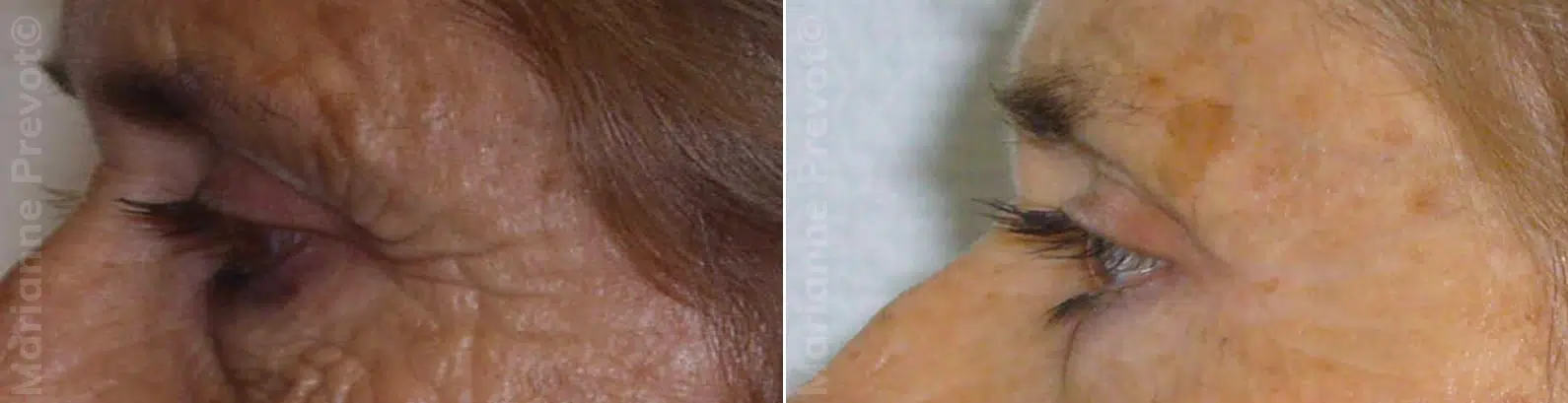
What technique is used for lower eyelid surgery?
In cases of simple bags, surgery is performed via a transconjunctival approach, with no skin incision and therefore no visible scar. The procedure is as quick and simple as upper eyelid surgery: local anesthesia or more, one hour of surgery, monitoring and no stitches to remove.
When there are also skin folds or muscle distension, muscle tightening is necessary, along with skin resection. In this case, the recovery period is longer, and the operation is preferably performed under general anesthesia.
Pre-operative consultations
Before scheduling blepharoplasty, an initial consultation allows us to confirm the indication and verify the absence of contraindications. A second consultation is then offered to optimize the organization of your care.
If you have a history of eye disease, I may request a follow-up ophthalmological consultation or a report from your ophthalmologist.
Finally, an appointment with the anesthesiologist will be scheduled.
How is a lower blepharoplasty performed?
The procedure takes place in clinic, as day surgery or with one night of postoperative monitoring for greater comfort.
What happens after lower blepharoplasty?
Hospital stay
Lower eyelid surgery can be performed on an outpatient basis or, for greater comfort, with a hospital stay of 3 to 24 hours. The operation lasts between 1 and 1.5 hours, preferably under general anesthesia.
Pain
Once the effects of the anesthesia have worn off, there is no real pain, sometimes just discomfort that can be relieved with simple analgesics. Occasionally, a few tears may give a sensation of eyelids being stuck together; in this case, eye washes are recommended.
Scars
As with any surgery, blepharoplasty leaves scars. However, they are invisible because they are hidden under the eyelashes and in a fine line at the outer corner of the eye. Transconjunctival blepharoplasty does not leave any visible scars on the skin.
Note that the scars may remain slightly pink for the first few weeks.
What are the costs of lower blepharoplasty?
The cost of lower eyelid blepharoplasty can vary considerably depending on the complexity of the procedure. The price generally includes the surgical fees, the surgeon’s fees, the anesthesiologist’s fees, and any clinic or hospitalization costs.
It is essential to consult with Dr. Prevot, who will provide you with a detailed estimate after assessing your specific needs.
FAQ
The operation lasts between 45 minutes and 1 hour 30 minutes, under general anesthesia.
The operation is 100% covered by health insurance if it is reconstructive surgery (for example, after eyelid skin cancer).
Blepharoplasty is not recommended in cases of dry eyes, conjunctivitis, untreated glaucoma, corneal ulcers, or monophthalmia.
Blepharoplasty for skin laxity is possible from the age of 40. In cases of hereditary excess fat, the operation can be performed in adulthood.
Blepharoplasty is not painful at all, either during or after the operation, but there may be some discomfort due to swelling during the first few days.
DR marianne prevot
Dr Marianne prevot is a plastic surgeon in Geneva specializing in aesthetic reconstructive pediatric and dermatologic surgery. With more than 20 years of experience she combines medical expertise scientific commitment and a human centered approach.
Her practice is based on harmony between body and mind with an ethical and balanced vision of surgery.